Quantcast Tennis Server - Turbo Tennis - Department of Corrections
nodot nodot
Turbo Tennis
September 1998 Article

Contact Ron Waite

Latest Turbo Tennis Article

Turbo Tennis Archives:
2001 - 2008
1996 - 2000

Perfect Tennis by Ron Waite

Get Ron Waite's
E-book Perfect Tennis!

Tennis Server
HOME PAGE

Do You Want To Be A Better Tennis Player?

Then Sign Up For A Free Subscription to the Tennis Server INTERACTIVE
E-mail Newsletter!

Enter your e-mail address:

You will join 25,000 other subscribers in receiving news of updates to the Tennis Server along with monthly tennis tips from tennis pro Tom Veneziano that won't be found on the web site.
 
Best of all, it is free!

Do You Want to Follow The Pro Game Too?

Then use this link to join the
Tennis Server Photo Feed
for photography and match reports from around the world.

Player Profiles:
Top Pros (Women)
tennis ball Jelena Jankovic
tennis ball Serena Williams
tennis ball Dinara Safina
tennis ball Elena Dementieva
tennis ball Ana Ivanovic
tennis ball Venus Williams
tennis ball Vera Zvonareva
tennis ball Svetlana Kuznetsova
tennis ball Maria Sharapova
 ... more profiles
 
Top Pros (Men)
tennis ball Rafael Nadal
tennis ball Roger Federer
tennis ball Novak Djokovic
tennis ball Andy Murray
tennis ball Nikolay Davydenko
tennis ball Jo-Wilfried Tsonga
tennis ball Gilles Simon
tennis ball Andy Roddick
tennis ball Juan Martin Del Potro
tennis ball James Blake
tennis ball David Nalbandian
tennis ball David Ferrer
 ... more profiles
 
Tennis Features Icon TENNIS FEATURES:

BETWEEN THE LINES - Ray Bowers takes an analytical and sometimes controversial look at the ATP/WTA professional tour.
 
PRO TENNIS SHOWCASE - Tennis match reports and photography from around the world.
 
TURBO TENNIS - Ron Waite turbocharges your tennis game with tennis tips, strategic considerations, training and practice regimens, and mental mindsets and exercises.
 
TENNIS ANYONE? - USPTA Pro John Mills' quick player tip.
 
WILD CARDS - Each month a guest column by a new writer.
 
TENNIS SET - Jani Macari Pallis, Ph.D. looks at tennis science, engineering and technology.
 
MORTAL TENNIS - Greg Moran's tennis archive on how regular humans can play better tennis.
 
MENTAL EQUIPMENT - Explore the mental side of the game with Dr. John Murray.
 
TENNIS WARRIOR - Tom Veneziano's Tennis Warrior archive.
 
HARDSCRABBLE SCRAMBLE - USPTA pro Mike Whittington's player tip archive.
 
TENNIS EQUIPMENT TIPS.

Tennis Community Icon TENNIS COMMUNITY:


Tennis Book, DVD, and Video Index
 
Tennis Server Photo Feed
 
Tennis Business Discussion Forum
 
Editor's Letter
 
Visit Our Sponsors - They keep Tennis Server a free service!
 
Become a Tennis Server Sponsor

Explore The Tennis Net Icon EXPLORE THE TENNIS NET:

Pro Tennis Calendar & Event Links
 
Tennis News and Live Tennis Scores
 
Tennis Links on the Web
 
Tennis Server on MySpace
 

nodot
Turbo Tennis


nodot
Department of Corrections

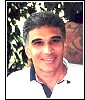
Ron Waite Photo
Ron Waite, USPTR

In my April column (Discover and Recover), I attempted to help the match player determine why she/he may be losing a match. The idea behind that particular column was spawned as a result of my coaching experience at Albertus Magnus College. As you may recall, one of the reasons that you may find yourself losing in a match involves stroke breakdown. All too often it seems, players find that even their weapons or most consistent strokes will break down in a match. Sometimes, just "hangin in there" will buy you enough time to resurrect these lost strokes. However, sometimes you need to regain form quickly or your opponent will "send you packin" quite early.

When the April column was released, many of you wrote to me and asked how best a player can get back on track if he/she is spraying or netting balls…even when hitting your favorite strokes!

Well, as follow up to the April column, I want to share with you what advice I give my players when they experience this kind of trauma. Vic Braden’s famous book on easy solutions to stroke problems, Vic Braden’s Quick Fixes, is worthwhile reading and would be a useful addition to any library. Although I find a few of his suggestions less than useful, the vast majority of material in this classic work is helpful. This book was released in 1988 and contains informative "cures" for both traditional and modern styles of play.

Before I get to my tips, I might suggest that you print out this article and carry a copy of it with you to matches. If you find yourself having consistent or total stroke breakdown, you can refer to it and hopefully get back on track quickly. However, do this "research" between games. Try to limit yourself to one correction at a time. Otherwise, you may fall victim to paralysis by analysis.

THE SERVE

The serve is probably the stroke that breaks down the most in matches…especially among club players. Why? Well, most of us don’t practice our serves frequently enough. Additionally, the motion of the serve is very different from the vast majority of tennis strokes (the overhead smash being really the only similar stroke). Finally, to serve well, you must have loose, relaxed muscles.

If you are excessively nervous in a match (and who isn’t?), you are a candidate for serve breakdown. Here is my advice:

  1. Spin slice or topspin serves on first serve. The very fact that you are adding spin to the ball makes it more controllable and more likely to drop in the service box. Getting a first serve in greatly increases your chances of winning the point! Getting any serve in when you are experiencing serve breakdown will help break the cycle of negative thinking and restore some confidence.
  2. Slow down and re-establish your serve rituals and rhythm. Rituals are the saviors of tennis!
  3. When first serves start going awry, it is imperative that you slow down, deliberately go through your serve rituals/routine, and attempt to be fluid in your service motion. Amazingly, this single piece of advice, given on court to my team players during matches, has had the most success. Why? I think it is because it is essentially non-cerebral advice.

  4. Adjust the toss. How many times have you heard this advice? Yet, most writers don’t tell you how to adjust the toss. If your serves are landing in the net, try lowering your toss and tossing just a bit more in front of you. If your serves are landing long, toss a little higher and directly above your head. The geometry associated with these adjustments almost always produces the desired result.
  5. See the contact point. Frequently, you’ll hear a teaching pro suggest to a student that he/she must keep his/her head up during the serve. While this is true, it is not for the reason that many pros put forth. The real benefit to keeping your head up on the serve is that you are more likely to see the racquet make contact with the ball…a requisite in serving! One of the best servers in the game, Stefan Edberg, always dropped his head in serving (I have the photos to prove it!) Yet, he always managed to see the contact point before he quickly dropped his head.

THE RETURN OF SERVE

This is tennis’ second most important stroke (the serve being most important). Fortunately, my return is one of the best parts of my game. I love big servers who hit the 100+mph flat serve.

Spin serves don’t bother me much…but I like the big, flat ones best. The more powerful…the better! To correct errant returns, I offer the following:

  1. Keep your eyes on the contact point at all times. I never allow myself to get caught up in a player’s service motion. Rather, I keep my eyes glued on the area that is two to three feet above the opponent’s head (the area where she/he is going to make contact with the ball).

    Staring intently upon this area does several things. It forces me to be ready. It prevents me from being deceived by a player’s "windup." It forces me to react more quickly. All of these are key to returning serve well…especially against the big server!

  2. Loosen your grip. The last thing you want to do is to grip your racquet too tightly when waiting to return serve. You must be able to move and adjust quickly on return (it is essentially a reaction shot). Tight, constricted muscles prevent you from making the adjustments necessary to return effectively. I know for many of you, the big server seems awesome and unbeatable. Trust me. Even the fastest serve seems to slow down a bit as the match progresses. Why? We eventually become accustom to the speed and spin. Now, if you don’t have a loose grip on your racquet this acclimation becomes useless because the body is unable to move fluidly and quickly to the ball.

  3. Keep your stance open…on both sides. The best returners use open stances (Agassi, Conners, etc.) Granted, if you hit a one-hand backhand an open stance may be too severe. You will benefit, however, by keeping your stance on this side more open than is usually the case. When returning serve, you really don’t have time to turn, step and hit. So, I eliminate the turn, and just step then hit. Believe me, closed stances when returning serve have no place in today’s power and pace oriented game! The added benefit to open stances when returning serve is that they automatically force you to shorten your backswing. This is probably the most common piece of advice given on improving one’s return of serve.

  4. Focus on finishing the stroke fully and correctly. Crazy as this may seem, I have found that I can actually improve my return if I focus on making certain that I follow through properly. Again, the reason that this works is because a full finish automatically forces you to take less of a backswing.

  5. Attack the serve. Sometimes, I find it is best to aggressively attack the serve by moving forward. In essence, I try the old, "chip and charge." This works best when the opponent is winning serve by spinning big kick serves or wide slice serves at me. However, I am not afraid to move in on my return when the opponent blasts the big flat serve. This action may take your opponent by surprise and temporarily disrupts her/his service rhythm. It is completely legal and not gamespersonship.

  6. When all else fails try the lob return. If I am really in trouble with my return of serve, I force myself to hit a few lob returns. How many times have you just "bunted" back a blistering serve that landed deep and beyond the service line? Your return lands deep in the opponent’s court. You may have said to yourself, "why can’t I return like that when I need to?" Guess what? You can! After a few successful attempts at this return, try to ease yourself back to your normal return of serve. (I actually practice this return…I find it that useful!)

GROUNDSTROKES

I have found that most groundstroke errors can be traced to one or more of several factors. The first of these is grip. Rod Laver believed that grip was of paramount importance. Tony Roache used to shave the handles of his racquets to assure that each one was identical. Warren Bosworth and his son, Jay, have developed quite a business fine-tuning the racquets of the pros.

(Remember Lendl’s change of racquet every 9 games?)

I find that many errors occur because the player has not gripped her/his racquet in the precise manner necessary for success on a given side. If you are experiencing problems with groundstrokes, check your grip. Many times, a very slight adjustment brings your grip…and the stroke… back. The variance may have been so slight that you may not have felt the difference as you warmed up. Other times, we just don’t change grips quickly enough. Unfortunately, I have no match advice or quick fix for this problem. If grip changes haunt you, go to a wall and hit the ball in such a way as to force the necessary grip changes. (Often, I will warm up before a match by hitting against a wall or backboard to "groove" my grip changes).

A second major reason that groundstrokes breakdown involves your head and body balance. Like the golfer, you should "freeze" your head during each groundstroke. Quieting the head provides balance through the shot. If my groundstrokes are really errant, the cause is usually related to my head as I make contact with the ball. When this occurs, I force myself to keep my head still at contact and to not look at where my ball is going for a full second after I have made contact. Believe me, this is the best corrective measure one can take when one’s groundstrokes are off.

Third, I think that groundstrokes naturally benefit from topspin. The ball will drop more quickly (more likely to land within the lines) and will bounce higher. Whenever, I feel that my groundstrokes are landing to deep, I force myself to hit high looping groundstrokes. The added net clearance means the balls are more likely to land deep in my opponent’s court.

This is extremely desirable!

As a final corrective measure, I will force myself to hit every groundstroke from an open or semi-open stance. This forces me to move more deliberately and to prepare more efficiently.

The only exception involves hitting the one-hand slice, which must be hit from a closed stance.

VOLLEYS

When it comes to correcting volleys during a match, there are only a few measures that I believe work. First, I try to move my head to the volley. I try to get my head as close to the path of the ball as is possible. This sounds crazy and dangerous…but believe me I have never been hit in the head by a ball in trying this. In fact, you never really get your head all that close to the ball by attempting this. However, this action automatically gets you moving to the ball. (Remember the old adage…don’t let the ball come to you?) In addition, this measure will automatically put your body in the right position to execute the volley…without having to think about it. (Really, we rarely have time to think about volleys…they are more often than not a reaction shot).

You have probably heard that good volleys are a result of good footwork…and this is true. I don’t believe that split steps are useful for most players. (They are great if you can do them without thinking about doing them). However, we can all slow down as the opponent’s racquet makes contact with the ball. Like the split step, this action will allow you to move in any direction that the ball is hit. In addition, it forces you to see the ball coming off your opponent’s racquet.

Now, if you are already at the net (as is often the case when playing doubles, and when you have already hit an approach shot or volley) keep your feet moving. Watch the pros. If they are at the net waiting for an opponent’s reply, they never stop moving their feet. This action keeps them alert, allows for quick movement in any direction, and keeps them literally on their toes.

HALF VOLLEYS

If you are a net rusher or like to play the net game, you will invariably have to hit half volleys. If this part of your game is breaking down, here is my advice. Stay low through the entire shot.

I cannot tell you how many times I see a great approach opportunity squandered because the player did not stay down until well after she/he had made contact with the ball. Sometimes, we hit half volleys because we are caught out of position. This is unavoidable at times. Here, form is a luxury. We just hit the half volley and hope that it drops in. However, whenever you can try to hold form through this shot by staying down. It really will help!

OVERHEAD SMASHES

Let’s face it…we all have missed some putaway overheads! The most common reason is that we took our eye off the ball. The second most common reason is that we were out of proper position to hit the volley. Well, both of these can be remedied by the following action. Pretend that you want to catch the lobbed ball in your non-racquet hand. You cannot catch a ball that you don’t watch carefully. In addition, trying to catch the lobbed ball puts your body in just the right position to execute a good smash (sideways with the ball in front of your body). The third reason that people have difficulty with the overhead deals with power. We all want to hit that smash deep with power. Actually, if you watch the pros this is not what they attempt with the smash.

They do one of two things: put the smash where the opponent isn’t or, hit the smash short in the court with pace…so that it bounces over the opponent’s head. The best fix for overheads is to practice them! In a match, however, you cannot afford to miss these opportunity shots. So, play it safe and hit them with just a little less pace and with a little more concern for placement.

These are the bread and butter shots of tennis. Sure, one can hit drop shots, stop volleys, swing volleys, etc. But, these are specialty shots that should not be attempted when your game is off.

(It is amazing to me how many players will attempt some of these when they are losing or off in their game). So, I have no quick fixes for these!

Truly, the best corrective measure is practice, practice, and more practice. However, if you find a stroke consistently breaking down in a match, take out this article and try some of my fixes. Hopefully, they’ll help you get back on track, and enable you to, once again, be a tennis overdog!

Green DotGreen DotGreen Dot

Turbo Tennis Archives:
1996 - 2000 | 2001 - 2008


If you have not already signed up to receive our free e-mail newsletter Tennis Server INTERACTIVE, you can sign up here. You will receive notification each month of changes at the Tennis Server and news of new columns posted on our site.
Enter your e-mail address:

This column is copyrighted by Ron Waite, all rights reserved. Questions and comments about these columns can be directed to Ron by using this form.

Ron Waite is a certified USPTR tennis instructor who took up the game of tennis at the age of 39. Frustrated with conventional tennis methods of instruction and the confusing data available on how to learn the game, Ron has sought to sift fact from fiction. In his seven years of tennis, Ron has received USTA sectional ranking four years, has successfully coached several NCAA Division III men's and women's tennis teams to post season competition, and has competed in USTA National singles tournaments. Ron has trained at a number of tennis academies and with many of the game's leading instructors.

In addition to his full-time work as a professor at Albertus Magnus College, Ron photographs ATP tour events for a variety of organizations and publications. The name of his column, TurboTennis, stems from his methods to decrease the amount of time it takes to learn and master the game of tennis.


nodot
nodot
Google
Web tennisserver.com
nodot nodot
The Tennis Server
Ticket Exchange

Your Source for tickets to professional tennis events.
 
PNC Tennis Classic Tickets Baltimore 11/21
 
Black Rock Masters Tickets London 12/2-12/7
 
Atlanta Slam Tennis Tickets 12/13
 
2009 Australian Open Tennis Tickets Melbourne Australia 1/19-2/1
 
2009 Pacific Life Open Tickets Indian Wells 3/11-3/22
 
2009 Sony Ericsson Open Tickets Miami 3/25-4/5


Tennis MindGame

 
Popular Tennis Books
 
Perfect Tennis by Ron Waite
 
Fearless Tennis by Jeff Greenwald
 
Smart Tennis by John Murray
 
The Inner Game of Tennis by W. Timothy Gallwey
 
Technical Tennis by Rod Cross and Crawford Lindsey
 
The Physics and Technology of Tennis


More featured events in the Tennis Server/MyCityRocks Ticket Exchanges:
 
  Jeff Dunham Tickets:
Jeff Dunham Tickets Winston Salem NC Lawrence Joel Veterans Memorial Coliseum
Jeff Dunham Tickets Asheville NC Civic Center
Jeff Dunham Tickets Sacramento CA Arco Arena
Jeff Dunham Tickets Fresno CA Save Mart Center
Jeff Dunham Tickets San Jose CA Hp Pavilion
Jeff Dunham Tickets Bakersfield CA Rabobank Arena
Jeff Dunham Tickets Colorado Springs CO World Arena
Jeff Dunham Tickets Omaha NE Qwest Center
Jeff Dunham Tickets Green Bay WI Resch Center
Jeff Dunham Tickets Dayton OH Ej Nutter Center

  Featured Tickets:
Johnny Mathis Tickets Fort Worth TX Bass Performance Hall
Johnny Mathis Tickets San Antonio TX Majestic Theatre
Johnny Mathis Tickets Palm Desert CA Mccallum Theatre
Johnny Mathis Tickets Melbourne FL King Center for the Performing Arts
Johnny Mathis Tickets Sarasota FL Van Wezel Performing Arts Hall
Johnny Mathis Tickets Red Bank NJ Count Basie
Johnny Mathis Tickets Morristown NJ Community Theatre At Mayo Center For The Performing Arts
Johnny Mathis Tickets
Jose Carreras Tickets
Jose Carreras Tickets London UK Royal Albert Hall

  Featured Tickets:
Twas The Week Before Christmas Tickets Los Angeles LA CA Walt Disney Concert Hall
Seven Brides for Seven Brothers Tickets Seattle WA 5th Avenue Theatre
1940s Radio Hour Tickets Minneapolis MN Hennepin Stages
New Year's Eve in Vienna Austria Silvester Tickets Musikverein
New Year's Eve Concert Tickets Venice Italy Teatro La Fenice
The Musical Box A Trick of the Tail Tickets Glenside Philadelphia PA Keswick Theatre
New Year's Eve Tickets Vienna Austria Wiener Staatsoper
David Copperfield Tickets Las Vegas NV Hollywood Theater MGM Grand
Thunder From Down Under Tickets Las Vegas NV Excalibur Hotel Casino
The Grapes of Wrath Tickets Costa Mesa CA Orange County Performing Arts Center Segerstrom Hall

  Chicago The Musical Tickets:
Chicago The Musical Tickets Denver CO Temple Buell
Chicago The Musical Chicago IL Ford Center for the Performing Arts
Chicago The Musical Tickets Baltimore MD Lyric Opera House
Chicago The Musical Tickets St Saint Petersburg FL Progress Energy Park
Chicago The Musical Tickets New York NYC NY Broadway Ambassador Theatre
Chicago The Musical Miami FL Ziff Opera House At The Adrienne Arsht Center
Chicago The Musical Tickets Miami FL Knight Concert Hall at The Adrienne Arsht Center
Chicago The Musical Tickets Columbia SC Koger Center For The Arts
Chicago The Musical Tickets London United Kingdom UK Cambridge Theatre
Chicago The Musical Tickets

  Tennis/Golf/Sports Tickets:
2009 Australian Open Tennis Tickets
2009 Pacific Life Open Tickets Indian Wells
2009 Sony Ericsson Open Tennis Tickets
2009 French Open Tennis Tickets
2009 US Open Tennis Tickets
Lil Wayne Tickets Oakland CA Oracle Arena
Jeff Dunham Tickets Vancouver BC Canada UBC Thunderbird Arena
Jeff Dunham Tickets Calgary Alberta Canada Stampede Corral
Jeff Dunham Tickets Southaven MS Desoto County Civic Center
Jeff Dunham Tickets Oklahoma City OKC OK Cox Convention Center


"Tennis Server" is a registered trademark and "Tennis Server INTERACTIVE" is a trademark of Tennis Server. All original material and graphics on the Tennis Server are copyrighted 1994 - 2008 by Tennis Server and its sponsors and contributors. Please do not reproduce without permission.


Tennis Server
Cliff Kurtzman
Editor-in-chief
2323 Clear Lake City Boulevard
Suite 180-139
Houston, Texas 77062-8120
Phone: (281) 480-6300
Fax: (281) 480-7715
Online Contact Form
How to support Tennis Server as a Sponsor/Advertiser
Tennis Server Privacy Policy