Quantcast Tennis Server - Turbo Tennis - Analyze This…No, Not the Movie
nodot nodot
Turbo Tennis
June 1999 Article

Contact Ron Waite

Latest Turbo Tennis Article

Turbo Tennis Archives:
2001 - 2008
1996 - 2000

Perfect Tennis by Ron Waite

Get Ron Waite's
E-book Perfect Tennis!

Tennis Server
HOME PAGE

Do You Want To Be A Better Tennis Player?

Then Sign Up For A Free Subscription to the Tennis Server INTERACTIVE
E-mail Newsletter!

Enter your e-mail address:

You will join 25,000 other subscribers in receiving news of updates to the Tennis Server along with monthly tennis tips from tennis pro Tom Veneziano that won't be found on the web site.
 
Best of all, it is free!

Do You Want to Follow The Pro Game Too?

Then use this link to join the
Tennis Server Photo Feed
for photography and match reports from around the world.

Player Profiles:
Top 12 Pros (Women)
tennis ball Ana Ivanovic
tennis ball Maria Sharapova
tennis ball Jelena Jankovic
tennis ball Svetlana Kuznetsova
tennis ball Elena Dementieva
tennis ball Serena Williams
tennis ball Venus Williams
tennis ball Anna Chakvetadze
tennis ball Dinara Safina
tennis ball Marion Bartoli
tennis ball Agnieszka Radwanska
tennis ball Daniela Hantuchova
 ... more profiles
 
Top 12 Pros (Men)
tennis ball Roger Federer
tennis ball Rafael Nadal
tennis ball Novak Djokovic
tennis ball Nikolay Davydenko
tennis ball David Ferrer
tennis ball Andy Roddick
tennis ball David Nalbandian
tennis ball James Blake
tennis ball Stanislas Wawrinka
<
tennis ball Richard Gasquet
/TD>
tennis ball Andy Murray
tennis ball Nicolas Almagro
 ... more profiles
 
Tennis Features Icon TENNIS FEATURES:

BETWEEN THE LINES - Ray Bowers takes an analytical and sometimes controversial look at the ATP/WTA professional tour.
 
PRO TENNIS SHOWCASE - Tennis match reports and photography from around the world.
 
TURBO TENNIS - Ron Waite turbocharges your tennis game with tennis tips, strategic considerations, training and practice regimens, and mental mindsets and exercises.
 
TENNIS ANYONE? - USPTA Pro John Mills' quick player tip.
 
WILD CARDS - Each month a guest column by a new writer.
 
TENNIS SET - Jani Macari Pallis, Ph.D. looks at tennis science, engineering and technology.
 
MORTAL TENNIS - Greg Moran's tennis archive on how regular humans can play better tennis.
 
MENTAL EQUIPMENT - Explore the mental side of the game with Dr. John Murray.
 
TENNIS WARRIOR - Tom Veneziano's Tennis Warrior archive.
 
HARDSCRABBLE SCRAMBLE - USPTA pro Mike Whittington's player tip archive.
 
TENNIS EQUIPMENT TIPS.

Tennis Community Icon TENNIS COMMUNITY:


Tennis Book, DVD, and Video Index
 
Tennis Server Photo Feed
 
Tennis Business Discussion Forum
 
Editor's Letter
 
Visit Our Sponsors - They keep Tennis Server a free service!
 
Become a Tennis Server Sponsor

Explore The Tennis Net Icon EXPLORE THE TENNIS NET:

Pro Tennis Calendar & Event Links
 
Tennis News and Live Tennis Scores
 
Tennis Links on the Web
 
Tennis Server on MySpace
 

nodot
Turbo Tennis


nodot
Analyze This…No, Not the Movie

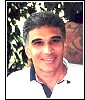
Ron Waite Photo
Ron Waite, USPTR

Those of you who read my column on a regular basis already know about one of my beliefs…I believe that for the most part there are two broad categories of players: the "hitter" and the "thinker."

The "hitter" is the player who usually has good strokes and at least one weapon. She/he approaches the game in a very one-dimensional manner. The "hitter" plays her/his game and only this game. If she/he is on top of her/his game in a given match, the chances are good that she/he will win. If the "hitter" is off or having a bad day, there is no hope of victory. Pros that fall into this category include: Goran Ivanisevic, Marat Safin, Gustavo Kuerten, Mary Pierce, Conchita Martinez and Amanda Coetzer. On any given day, on any given surface, against any given opponent; these players employ a rather narrow game plan. They usually win big or lose big.

If you travel to almost any of the major tennis academies in this country, you will no doubt see coaches who almost berate their charges with "just hit the ball!" Their goal is to teach these aspiring players to hit out on almost every shot. When Andre Agassi was a child, his father’s advice was very similar. The theory is that if you hit out on every shot, sooner or later, you will find more landing in than out. These coaches and academies have spawned generations of "hitters" beginning with Jimmy Arias.

The "thinker" is a more cerebral player. He/she is flexible and willing to adapt. Usually, these players are labeled as being "fiercely competitive." They will do whatever it takes to win. They never really give up on a match because they realize that there is always a way to win. Quite often, these "thinkers" will come back and win a match after a disasterous start. They may or may not have one or two big weapons…but they always have a way to change their game when they are behind. Michael Chang, Karol Kucera, Martina Hingis and Arantxa Sanchez-Vicario are some pros who are true "thinkers." In any given match, you may see several different game plans executed by each of these players.

Now, there are some players who seemingly were always both "hitters" and "thinkers." These players are rare, indeed. However, they clearly rise to the top. Some professional examples are Pete Sampras, Billy Jean King, and of course, Rod Laver.

Some of the great pros became "thinkers" somewhat after the fact. Jimmy Connors could always crush the ball. But, it wasn’t until he was coached by Pancho Seguro that he began to reach his full potential. Andre Agassi was dominating pro players with his heavy groundstrokes at age 16. However, he never really reached the top until he met his present coach, Brad Gilbert. Both of these coaches were known as great "thinkers" when they played the game.

Most of us like to believe that our strokes and skills are such that we need only be a "hitter." This is especially true among juniors and college players. Yet, the truth is that most of us just aren’t that talented. Nor do we have the time (4 to 6 hours per day) to dedicate to keeping those skills well honed!

Well, this month’s column will hopefully help you to become more of a "thinker" on the court. I used to think that I was a fairly good "hitter" and could out perform most of my opponents. This belief put me on the inevitable "hitter’s" rollercoaster. I won big and I lost big. At best, this was a 50/50 proposition. Eventually, my wiser self prevailed. I tried to be more cunning and to vary my play. The results were profound. I started winning 70% to 80% of the time…against the same opponents. My approach to the game was changed forever.

To become a winning "thinker," several principles must be recognized and put in place. First, there are no style points in tennis! Either you win the point or you lose it. In the final analysis, it doesn’t really matter how. Bigger is not necessarily better in tennis. Sometimes, less is more in tennis. For "hitters" this can be very difficult to accept. "Thinkers" love to play these stubborn "hitters!"

Second, you must try to develop an all-court/all stroke game. This is needed if you are to have more than one trick in your bag of tricks. You need flat serves, kick serves, big groundstrokes, realiable volleys, overheads, slice shots, drop shots, topspin shots, lobs, etc. You need to be able to crush the ball and to massage the ball equally well. If the shot exists in tennis, you want to learn it. I must say that this realization has made the practicing more pleasurable for me…now, there is always something new to learn and acquire.

Third, you must become opponent-directed in your thinking. Rather than worrying about your strokes, your weaknesses, your weapons…you need to focus on the opponent’s likes and dislikes. Very simply, the "thinker" knows that most points in tennis are lost through errors than won through winners. The "thinker’s" ultimate goal is to help the opponent lose! Thus, to play the "thinker’s" game, you must become a good observer! Observation is not egocentric. When the "hitter" finds himself/herself down in a match, he/she looks within for the answer. The "thinker," however, looks at the opponent…trying to observe what are the opponent’s weaknesses. Once the crack in the armor is found, the "thinker" exploits the flaw relentlessly. Sure, the weakness may be only temporary. But, the "thinker" is always alert for new weaknesses that may arise. This is why the "thinker" is never out of a match…regardless of the score. Essentially, the "thinker" is like the counterpuncher in boxing.

So, how does one become a better observer? Well, there are at least several ways. First, try to observe your opponent when she/he is playing someone else. This is especially important if you play this person regularly. Having a somewhat detached, objective point of view will allow you to observe that which you can’t see during competition. I like to record my insights in writing…actually creating a player profile for future reference.

Second, you should observe the opponent during the warmup. This is useful, but it can be misleading. Frequently, players will hide their weaknesses during the warmup. In addition, people hit differently under stress. Warmups don’t push or stretch the player. However, warmups do provide some information…and some information is better than none. Just don’t put all your hopes on your warmup insights.

Recently, I read a tennis text that suggested a player should win the warmup. No one wins a warmup! Yet, you can lose the value of the warmup if you only focus on your side of the net. Let’s be honest. How much warming up does a 5 minute warmup really provide? Better to spend the time assessing your opponent.

Third, you need to observe your opponent during the match itself. Now, I don’t advocate thinking during the actual playing of a point. Visualizing shots during play can be very helpful, but thinking during play is almost always counterproductive! How many times have you lost a point because you "changed your mind" about something during the stroke. The mind is a terrible thing to waste but not during points. Rather, you need to think between points and between games. However, you can observe during a point and analyze the data later without hindering your stroke production.

This leads us to the key question…what specifically should I be observing? Well, here is my checklist. It is not all inclusive, but these are some of the most useful indicators:

  1. Is my opponent right or left handed? You would be amazed at how many people don’t realize that their opponents are left handed until the match is over. Generally, you need to be a bit cautious when playing a left handed opponent. The spin that lefties impart is different from the spin imparted by righties. Usually, it takes a little time to become acclimated to playing a leftie.

    Thus, it is best to play conservative, percentage tennis for at least the first few games. By then, you hopefully will have adjusted to the leftie spin. At this point, you can become a bit more aggressive with your shots, if the opportunities present themselves.

  2. What kind of forehand grip does my opponent use? Every forehand grip has advantages and disadvantages. If your opponent uses a Continental grip, she/he will probably have a difficult time returning high bouncing, topspin shots. Eastern forehand players usually have a difficult time controlling balls that force them to stretch to hit a forehand. Semi-Western grips are tough to attack, but usually balls hit without pace are problematic for the player who uses this forehand grip. Finally, Western grips are very vulnerable to low bouncing, sliced shots…particularly if these shots have pace.

  3. How does my opponent hit her/his backhand? Twohanders usually return serve well and can handle most shots hit with pace. However, low bouncing, slice shots can over time in a match take their toll on the twohander. In addition, twohanders have less reach than onehanded players. Every time you force a twohanded player to hit a onehanded backhand, you increase your chances of winning the point. So, you will probably want to stretch the twohanded player out on this wing whenever possible.

    Onehanded players can hit with topspin, slice or hit the ball flatly. The slice player hates the high bouncing, topspin ball. The flat player usually wants pace and hates the soft ball. Topspin onehanders are rare, but they will usually have a problem with both very high bouncing moonballs and with low bouncing, slice shots that have pace.

  4. How well does my opponent move? Players that are fast of foot usually want to run. You can’t always hit at them, but once they are in motion, don’t be afraid to hit right at them. They frequently will overhit their reply. If your opponent is out of shape, run him/her until the cows come home! You may lose the first set, but sooner or later, she/he will fatigue. That is when her/his errors will become numerous!

  5. Which is my opponent’s better wing? Usually, every player has one side that is better than the other. Obviously it is best to try to hit fewer balls to the stronger wing. Frequently, players are more consistent on what is their weaker side. Yet, they usually can’t hit winners from this weaker wing. So, if you are tired and want to catch your wind, or if want to rally and hopefully fatigue your opponent, hit to the weaker wing. It has been my experience that hitting consistently to the opponent’s weaker side will force him/her to become impatient. This impatience may lead to the opponent attempting an ill conceived winner. Finally, if one side is really weak, almost any ball you hit with lots of pace or hit with heavy slice will elicit an error from your opponent.

  6. Every time an opponent makes an error, make a note of it. When your opponent makes an error, remember this essential data…forehand or backhand error?…where on the court did the error occur?…what caused the error? Humans are creatures of habit and make the same errors over and over…this axiom is especially true in tennis. If the same circumstances present themselves, the opponent will make the same error as before. The key is to be aware of the circumstances.

  7. Is my opponent changing his/her game plan? Why? If an opponent is doing something different, it is usually for a reason. The question you must ask yourself is: Why is she/he changing things? Sometimes, it is a new strategy. Sometimes, the opponent is fatigued. Sometimes, the opponent is mentally weakened. Sometimes, the opponent is injured. Sometimes, the opponent has developed a second wind. These are just some of the possible answers. Once you know the real answer, you can fashion the appropriate response, if one is necessary.

  8. What is the overall pace of the match and who does it favor? Here, we are talking about the time taken in between points and in between games. The rule is simple: Keep the pace if you are winning. Slow down the pace if you are losing. If you sense that your opponent is down or she/he is acting dejected, try to quicken the overall pace of the match.

  9. When does my opponent hit winners? Everyone makes some winners in a match. If your opponent consistently hits a winning shot, make note of it. When, where and how does this winner occur? What can you do to prevent it from being hit over and over again. The quick answer may be that you need to hit away from that wing or from that section of the court. This may not be easy to achieve. If not, try to vary the pace of your shot, the spin you impart and/or the ball’s bounce height. Changing one or all of these may neutralize your opponent’s winning shot without forcing you to hit away from a wing or section of the court.

These are just some of the most important observations to make when playing an opponent. Winning is the name of the game. Most of us are not blessed with the impeccable stokes of a Pete Sampras or Martina Hingis. Thus, we must bring something else to the table.

Taking the time to observe and analyze an opponent can pay big dividends with respect to your win/loss record. By becoming a "thinker" on the court, I am certain that in no time you will become a tennis overdog!

Green DotGreen DotGreen Dot

Turbo Tennis Archives:
1996 - 2000 | 2001 - 2008


If you have not already signed up to receive our free e-mail newsletter Tennis Server INTERACTIVE, you can sign up here. You will receive notification each month of changes at the Tennis Server and news of new columns posted on our site.
Enter your e-mail address:

This column is copyrighted by Ron Waite, all rights reserved. Questions and comments about these columns can be directed to Ron by using this form.

Ron Waite is a certified USPTR tennis instructor who took up the game of tennis at the age of 39. Frustrated with conventional tennis methods of instruction and the confusing data available on how to learn the game, Ron has sought to sift fact from fiction. In his seven years of tennis, Ron has received USTA sectional ranking four years, has successfully coached several NCAA Division III men's and women's tennis teams to post season competition, and has competed in USTA National singles tournaments. Ron has trained at a number of tennis academies and with many of the game's leading instructors.

In addition to his full-time work as a professor at Albertus Magnus College, Ron photographs ATP tour events for a variety of organizations and publications. The name of his column, TurboTennis, stems from his methods to decrease the amount of time it takes to learn and master the game of tennis.


nodot
nodot
Google
Web tennisserver.com
nodot nodot
The Tennis Server
Ticket Exchange

Your Source for tickets to professional tennis events.
 
US Open Tennis Tickets New York NY 2008 - 8/18/08 - 9/7/08
 
Wimbledon Tennis Tickets London England 2008 - 6/23/08 - 7/6/08


Tennis MindGame

 
Popular Tennis Books
 
Perfect Tennis by Ron Waite
 
Fearless Tennis by Jeff Greenwald
 
Smart Tennis by John Murray
 
The Inner Game of Tennis by W. Timothy Gallwey
 
Technical Tennis by Rod Cross and Crawford Lindsey
 
The Physics and Technology of Tennis


More featured events in the Tennis Server/MyCityRocks Ticket Exchanges:
 
  Featured Tickets:
Steve Harvey Tickets Macon GA City Auditorium
Widespread Panic Tickets Toronto Ontario Canada Sound Academy
Widespread Panic Tickets Cleveland OH Plain Dealer Pavilion The Scene
Widespread Panic Tickets Aspen CO Jazz Snowmass
Widespread Panic Tickets Knoxville TN Tennessee Theatre
Widespread Panic Tickets Rochester NY Main Street Armory
Wilco Tickets Lenox MA Tanglewood Music Center
Wilco Tickets Brooklyn NY Mccarren Park Pool
Wilco Tickets Indianapolis IN Lawn White River State Park
Wilco Tickets Jacksonville FL Florida Theatre

  Featured Tickets:
2008 Olympics Beach Volleyball Tickets Beijing China
2008 Olympics Judo Tickets Beijing China
2008 Olympics Equestrian Tickets Beijing China
2008 Olympics Opening Ceremony Tickets Beijing China
2008 Olympics Wrestling Tickets Beijing China
2008 Olympics Baseball Tickets Beijing China
2008 Olympics Taekwondo Tickets Beijing China
2008 Olympics Swimming Tickets Beijing China
2008 Olympics Soccer (Futbol) Tickets Beijing China
US Olympic Swimming Team Trials Tickets Omaha NE Qwest Center

  Featured Tickets:
Jonas Brothers Tickets New York NYC NY MSG Madison Square Garden
The Who Tickets Los Angeles LA CA VH1 Rock Honors Pauley Pavilion
Miguel Cotto vs Antonio Margarito Tickets Las Vegas NV MGM Grand Garden Arena Boxing
Antonio Margarito vs Miguel Cotto Tickets Las Vegas NV MGM Grand Garden Arena Boxing
Bruce Springsteen Tickets San Sebastian Spain Anoeta Stadium
Bruce Springsteen Tickets East Rutherford NJ Giants Stadium
Bruce Springsteen Tickets Boston Foxboro MA Gillette Stadium
Bruce Springsteen Tickets Madrid Spain Santiago Bernabeu Stadium
Bruce Springsteen Tickets Barcelona Spain Camp Nou
Bruce Springsteen Tickets Charleston SC North Coliseum

  Featured Tickets:
Rascal Flatts Tickets Hersehy Harrisburg PA Giant Center
Rascal Flatts Tickets Camden NJ Susquehanna Bank Center (Tweeter)
Rascal Flatts Tickets Virginia Beach VA Verizon Wireless Amphitheatre
Rascal Flatts Tickets Chicago Tinley Park IL First Midwest Bank Amphitheatre (Tweeter Center)
Rascal Flatts Tickets Charlotte NC Verizon Wireless Amphitheatre
Rascal Flatts Tickets Tampa FL Ford Amphitheatre at the Florida State Fairgrounds
Rascal Flatts Tickets West Palm Beach FL Cruzan Amphitheatre (Sound Advice)
Rascal Flatts Tickets Cincinnati OH Riverbend Music Center
Chris Rock Tickets Atlantic City NJ Borgata Events Center
Chris Rock Tickets Vancouver Canada Orpheum Theatre

  Tennis/Golf/Sports Tickets:
Wimbledon Tennis Tickets London England 2008
US Open Tennis Championships Tickets 2008 New York NY
US Open Tennis Tickets Men's Finals
US Open Tennis Tickets Women's Finals
US Open Tennis Tickets Men's Semifinals
US Open Tennis Tickets Women's Semifinals
Masters Golf Tournament Tickets
Ryder Cup 2008 Tickets Louisville KY Valhalla Golf Club
2008 Beijing China Olympics Opening Ceremony Tickets
2008 Beijing China Olympics Closing Ceremony Tickets
PGA Championship Tickets


"Tennis Server" is a registered trademark and "Tennis Server INTERACTIVE" is a trademark of Tennis Server. All original material and graphics on the Tennis Server are copyrighted 1994 - 2008 by Tennis Server and its sponsors and contributors. Please do not reproduce without permission.


Tennis Server
Cliff Kurtzman
Editor-in-chief
2323 Clear Lake City Boulevard
Suite 180-139
Houston, Texas 77062-8120
Phone: (281) 480-6300
Fax: (281) 480-7715
Online Contact Form
How to support Tennis Server as a Sponsor/Advertiser
Tennis Server Privacy Policy